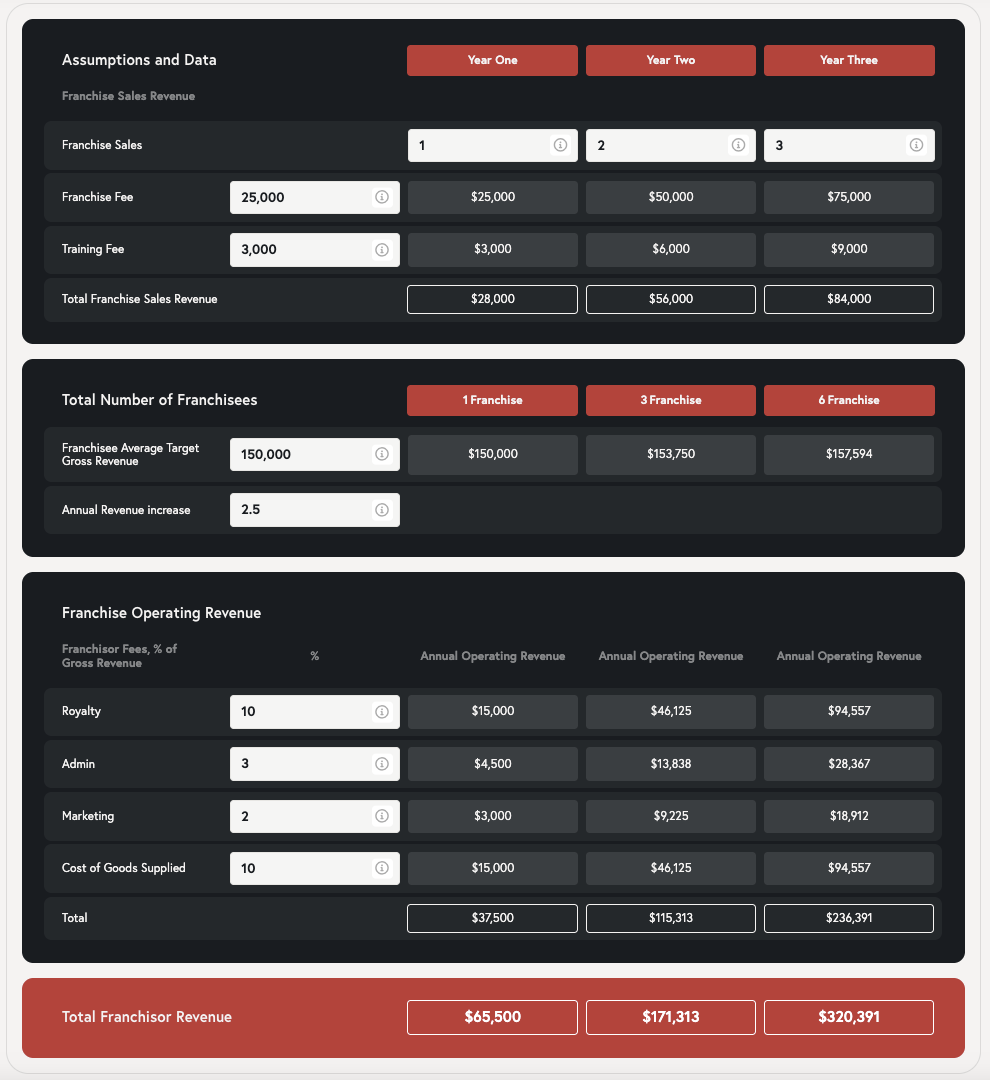


Breaking Down Franchise Fees in Australia
For Australian business owners exploring franchising, understanding franchise fees is one of the most important steps in building a successful and sustainable model. Franchise fees are not just a source of revenue, they represent the value, systems, and support that franchisees receive when joining your network.
Getting the fee structure right helps attract the right people, protect your brand, and ensure the financial health of both franchisor and franchisee. When fees are transparent, fair, and backed by genuine value, they create the foundation for a trusted and long-lasting relationship.
What is a franchise fee?
A franchise fee is the initial payment a franchisee makes to gain the right to operate under your brand. It provides access to your intellectual property, business model, operational systems, and the reputation you have worked hard to build.
In Australia, franchise fees commonly range between $20,000 and $50,000 depending on the industry, brand maturity, and value provided. For some service-based or home-based franchises, the fee may be lower, while more established or high-demand brands may command higher fees.
Keeping this fee accessible helps new franchisees join your network and can accelerate early growth. A competitive franchise fee can also make your opportunity stand out in a crowded market where new business buyers are comparing value, support, and returns.
Do franchisees pay for training?
Yes. Most franchises charge a separate training fee to cover the costs of onboarding and initial preparation. This fee typically includes the time and resources required to train new franchisees, such as staff hours, training materials, systems setup, and venue or travel expenses.
Training is one of the most valuable inclusions in a franchise model because it provides the confidence and knowledge franchisees need to run their business successfully. A well-structured program ensures consistency across locations and reduces early operational errors.
At TMPlus | Tereza Murray Franchising, we work with business owners to design and document training systems that not only justify these fees but also deliver genuine long-term value to franchisees.
What are start-up kits in franchising?
In many service-based or mobile franchises, start-up kits are a key part of the initial investment. These kits can include uniforms, branded materials, tools, equipment, signage, marketing collateral, and software licences.
Providing a comprehensive kit ensures franchisees can begin trading quickly and with full brand alignment. It also removes confusion about what they need to operate effectively.
Some franchisors offer flexibility by allowing franchisees to source their own equipment, provided it meets approved brand standards. This approach can make the franchise opportunity more affordable while maintaining quality and consistency. The balance between flexibility and control is crucial to keeping your brand professional and accessible.
How are marketing contributions structured?
Marketing funds are essential for maintaining brand awareness and generating customer demand across the network. Most franchisors establish a collective marketing fund that franchisees contribute to on an ongoing basis.
These contributions are often structured as a percentage of gross revenue or as a fixed monthly amount. Common uses of the marketing fund include digital advertising, social media campaigns, national promotions, and shared marketing assets such as templates or videos.
While percentage-based contributions are standard, some franchisors prefer fixed or tiered rates to ensure fairness and predictability. For instance, a smaller territory might pay a set amount each month, while a larger or higher-turnover franchise may contribute proportionally more.
The most important element of marketing fund management is transparency. Franchisees should know how the fund is used and how it benefits their business. Clear reporting builds trust and strengthens the overall network.
What is a royalty fee in franchising?
Royalty fees are ongoing payments made by franchisees for the continued use of your brand, systems, and support services. These fees are usually paid weekly or monthly and calculated as a percentage of gross revenue.
In Australia, royalty rates typically fall between 2 per cent and 10 per cent depending on the business model, industry, and level of ongoing support provided. Service-based franchises that require high engagement and regular updates may charge higher royalties, while product or retail models with larger turnover may operate at a lower percentage.
Some franchisors choose to use fixed royalty structures instead of percentage-based fees. This can make budgeting easier for franchisees and provide steady income for the franchisor. Others use hybrid models, such as a fixed base rate plus a small revenue percentage.
The right royalty structure depends on your industry, the value you provide, and the sustainability of your network. TMPlus helps business owners evaluate different models to determine what aligns best with their goals.
Are there other common franchise fees?
Yes. Beyond franchise and royalty fees, many systems include additional charges for shared services that support the network. These may include:
Technology platform access or software subscriptions.
Centralised billing, call centre, or administration support.
Ongoing training, workshops, or refresher courses.
Attendance at annual conferences, meetings, or events.
These fees should always be disclosed clearly and explained as part of the franchise opportunity. When franchisees understand how their contributions directly support their success, they view these costs as investments rather than expenses.
Transparency and fairness in how fees are applied and communicated are vital for maintaining trust and avoiding disputes.
Why are fees so important for long-term success?
Franchising is a partnership built on shared investment and shared reward. Fees provide the financial structure that keeps the network operating effectively. When designed well, fees allow the franchisor to reinvest in systems, marketing, and innovation while ensuring franchisees remain profitable.
The most successful franchises focus on balance. They keep upfront costs accessible while establishing sustainable, recurring revenue through royalties and service fees. This approach attracts quality franchisees who are serious about building long-term businesses rather than chasing short-term guarantees.
A fair fee structure creates alignment between franchisor and franchisee. Both parties benefit from each other’s success, and the relationship becomes one of collaboration and growth rather than control or dependency.
How does TMPlus help business owners design the right fee model?
At TMPlus | Tereza Murray Franchising, we work with Australian business owners to develop franchise fee structures that make commercial sense. Our process considers your market, operational costs, and the value delivered to franchisees, ensuring every fee is justified, transparent, and easy to explain.
We design comprehensive financial frameworks that balance affordability for franchisees with sustainability for franchisors. Our tailored franchise development packages include guidance on setting initial franchise fees, royalties, training costs, and marketing contributions.
By aligning your fee model with your brand strategy and long-term goals, we help you attract motivated partners and build a network that lasts.
To learn more, visit www.tmplus.com.au and discover how TMPlus can help you create a fair and sustainable franchise model.
.svg)