Understanding the Realities of Franchising in Australia
Franchising remains one of the most powerful and proven growth strategies for small business owners in Australia. It offers a structured pathway to expand your brand, attract motivated partners, and scale sustainably without the burden of managing every new location yourself.
However, many small business owners underestimate their franchising potential. Some assume franchising is reserved for large, established brands with national recognition, when in reality, it can be an ideal strategy for smaller, well-run businesses. Understanding what franchising truly involves and what it requires to succeed is the first step in determining whether this growth model is right for you.
How do you know if your business is franchisable?
Not every business can be franchised, but many are more franchisable than their owners realise. The first consideration is demand. If your business consistently attracts customers and generates positive word of mouth, there is a strong chance the model can succeed in other regions too.
Franchising readiness depends on three main areas:
A proven business model that consistently delivers results.
Profit margins that can support both the franchisor and franchisee.
Systems and processes that can be taught and replicated.
A franchisable business is one that runs smoothly without relying solely on you as the owner. It should have predictable results, repeatable systems, and a brand or service that people value enough to invest in. TMPlus helps business owners evaluate these factors and strengthen them to create a replicable, scalable model ready for the market.
Why is profitability so important for franchisees?
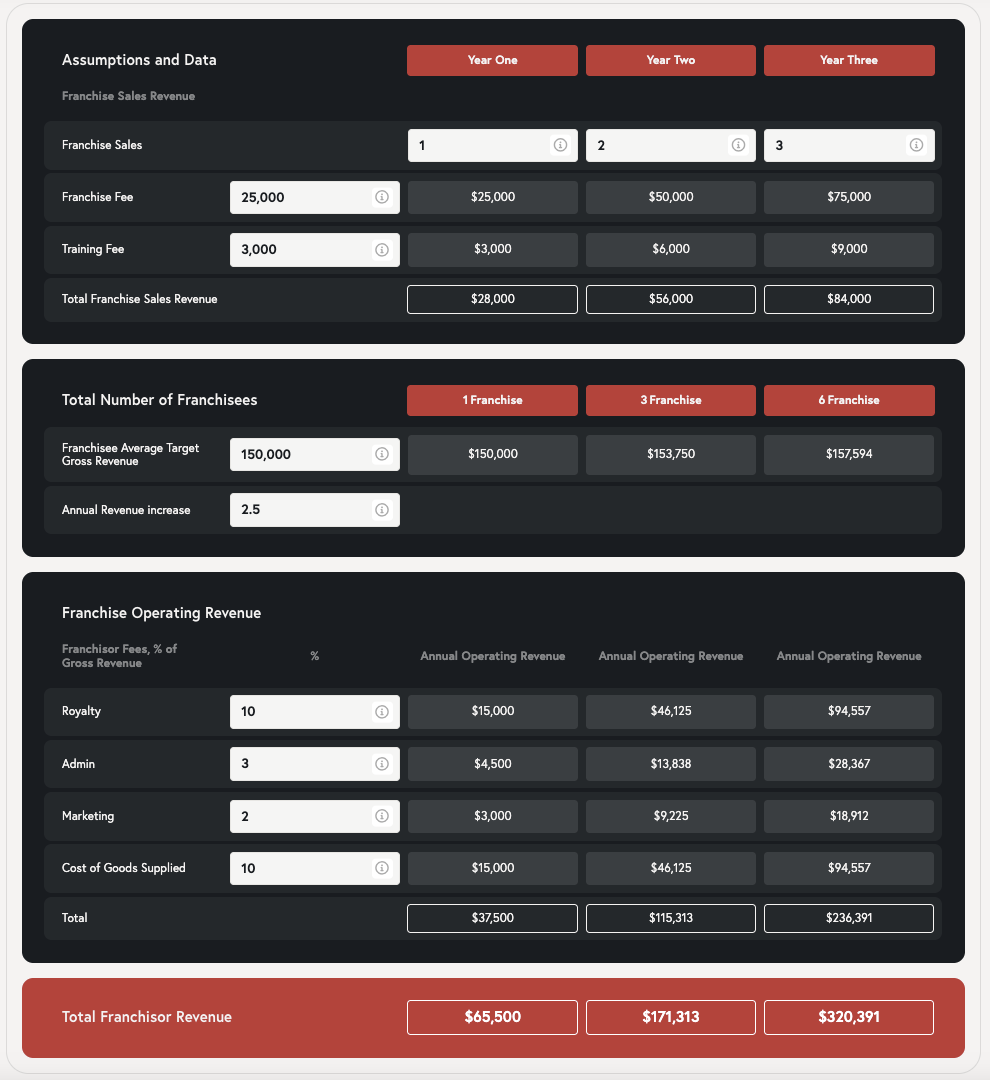
Profitability is at the heart of every successful franchise. Franchisees are not simply buying a brand name; they are investing in their future. To attract strong candidates, you must present a financially compelling opportunity that clearly demonstrates potential returns.
Franchisees look for:
Clear financial transparency showing realistic earnings potential.
A pathway to profitability that outperforms employment or contracting.
Predictable revenue streams supported by consistent demand.
Confidence that their investment will deliver sustainable returns.
At TMPlus | Tereza Murray Franchising, we help business owners refine their numbers and test their model to ensure the opportunity is commercially sound. A profitable franchise model benefits both parties, as franchisees enjoy stability and growth while franchisors gain a healthy, loyal network that sustains long-term success.
Do you need systems in place before franchising?
Yes, but they do not need to be perfect before you start. What matters is having a structured, teachable way of doing business that delivers consistent outcomes. Franchisees buy into systems, not just ideas.
Documenting your business processes, from how you deliver your service to how you market, manage customers, and control costs, is a critical step. These systems form the foundation of your franchise operations manual, which becomes the go-to guide for every franchisee.
When we work with clients at TMPlus, we develop and document these systems for them as part of the franchise setup process. You do not need to have every process formalised before you start. Our team helps translate what you already do well into clear, replicable steps that franchisees can easily follow.
How important is franchisor support for success?
Support is one of the main reasons people choose to buy a franchise instead of starting a business from scratch. Franchisees want independence but also value guidance from someone who has already navigated the challenges of building the brand.
Effective franchisor support can include:
Comprehensive onboarding and initial training.
Ongoing mentorship and professional development.
Access to shared marketing, technology, and operational tools.
Regular check-ins, communication, and performance support.
Smaller, emerging franchise systems often have an advantage because they can provide more personal and direct support. This human connection helps franchisees feel part of something bigger and builds strong loyalty within the network. A franchisor’s responsiveness and involvement are often deciding factors in a franchisee’s long-term success.
Does brand recognition matter when franchising?
Many small business owners believe they need to become a household name before they can franchise, but that is not the case. While established brands attract attention, emerging franchises often appeal to franchisees looking for something new, personal, and affordable.
Franchisees are often drawn to:
Lower entry costs compared to major brands.
Greater access to prime territories that large systems have already taken.
The chance to work closely with the founder or franchisor.
A sense of influence and involvement in shaping the brand’s direction.
Your brand does not need nationwide fame to succeed. What matters most is a clear value proposition that explains what sets your business apart. Whether it is innovation, superior service, or a unique niche, communicating your difference helps you attract franchisees who believe in your brand’s purpose and potential.
Why are relationships so important in franchising?
Franchising is not just a business model. It is a partnership built on trust and collaboration. Relationships are the foundation that hold the network together. A strong franchisor and franchisee relationship creates cooperation, mutual respect, and alignment.
Healthy relationships lead to:
Open communication that prevents misunderstandings.
A supportive culture where franchisees share insights and solutions.
Increased trust and loyalty within the network.
Franchisees becoming ambassadors who protect and promote your brand.
In Australia, many successful franchise systems are built on this principle of collaboration rather than control. Franchisees invest not only in the business but also in the person leading it. Strong relationships, combined with structure and transparency, create a culture where everyone succeeds.
What are the key takeaways for small business owners?
Franchising is achievable for many small business owners once they understand what is truly required. The most successful franchise systems in Australia are not always the largest. They are the most structured, transparent, and well-supported.
To prepare for franchising, focus on:
Proving your model’s success and profitability.
Building simple, repeatable systems.
Offering genuine support and open communication.
Attracting the right people who share your values.
Franchising is not about giving away your business. It is about multiplying your success through a network of committed partners who share your vision.
Conclusion
Franchising is not limited to large corporations with deep pockets. Many Australian small businesses are perfectly positioned to franchise with the right foundations and support. A consistent customer base, strong margins, and teachable systems can become the building blocks of a thriving franchise network.
At TMPlus | Tereza Murray Franchising, we specialise in helping small business owners transform proven businesses into scalable franchise systems. From feasibility and documentation to recruitment and support, we provide the structure and strategy needed to grow with confidence.
If you are ready to explore whether your business is franchisable, visit www.tmplus.com.au to begin your journey.
.svg)