

Understanding Common Franchise Fee Ranges in Australia
Franchising offers Australian business owners an exciting way to grow their brand while helping others achieve business ownership. But one of the first questions both franchisors and franchisees ask is, “What does it actually cost?” Franchise fees are a key part of this conversation. They represent the upfront investment that gives franchisees access to your brand, systems, and support network.
In Australia, franchise fees vary widely depending on the industry, brand reputation, and level of support provided. To make informed decisions, whether you are setting your fees as a franchisor or evaluating a franchise to buy, it is important to understand how these fees are structured and what they really include.
What is a franchise fee and what does it cover?
A franchise fee is the initial payment a franchisee makes to a franchisor in exchange for the right to operate under an established brand. This fee grants access to the franchisor’s intellectual property, operating systems, and training programs.
Typically, a franchise fee covers:
Use of the brand name, trademarks, and reputation
Initial training and onboarding programs
Access to proven operating systems and manuals
Marketing resources and launch materials
Ongoing business support from the franchisor team
The fee also reflects the value of the brand’s credibility and the years of experience behind it. A strong franchise model includes more than just a logo. It provides the tools, knowledge, and support that give franchisees a higher chance of success from day one.
What is the average franchise fee in Australia?
Franchise fees in Australia can range significantly, with most falling between $10,000 and $100,000, depending on the business type and level of support.
Here’s a general guide to typical fee ranges:
Low Investment Franchises ($10,000–$25,000):
These are usually mobile or home-based operations with minimal overheads, such as cleaning, home services, or consulting.Mid-Tier Franchises ($25,000–$50,000):
These include service-based models like fitness, education, or small retail outlets that require modest premises or equipment.High Investment Franchises ($50,000–$100,000+):
Well-known brands in hospitality or food retail often sit in this range. The higher fee reflects extensive training, brand power, and ongoing support infrastructure.
Some large-scale or multi-site franchises can exceed $250,000, particularly if they involve significant fit-out costs, specialist equipment, or exclusive territories.
While cost is an important factor, franchisees should focus equally on value. Paying more for a strong, reputable brand with comprehensive support can often deliver better long-term results than choosing a cheaper but less structured option.
How are franchise fees calculated?
There is no fixed formula for calculating franchise fees in Australia. Each franchisor determines pricing based on several key factors, including:
Brand strength and market reputation: Well-established brands command higher fees because they offer greater brand recognition and trust.
Training and support: The more extensive the onboarding and operational assistance, the higher the initial investment.
Industry type: Certain industries, such as food and hospitality, naturally involve higher setup costs and regulatory requirements.
Geographic territory: Larger or exclusive territories may justify higher franchise fees.
System development: The complexity and quality of a franchisor’s systems and documentation also influence cost.
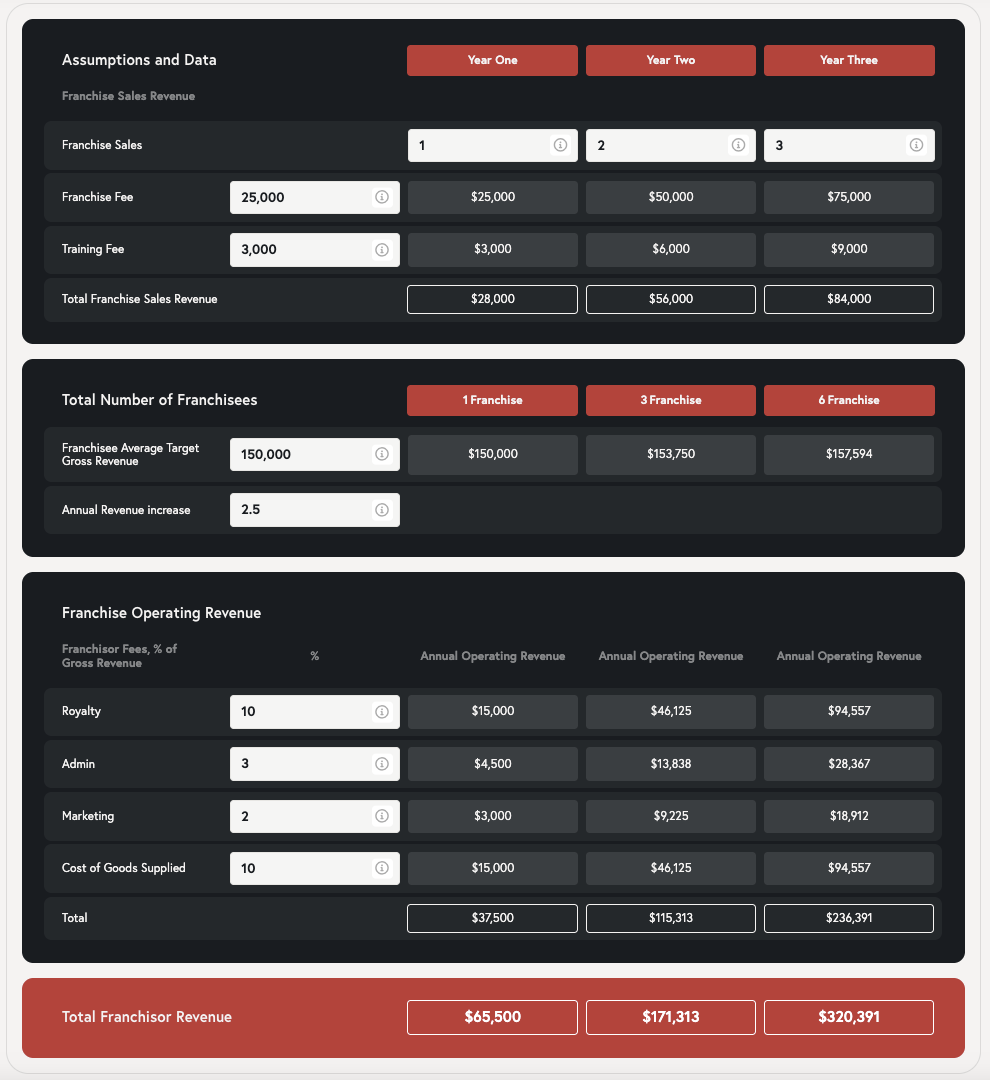
It is important to remember that franchise fees are only one component of a broader financial structure that includes royalties, marketing contributions, and operational costs.
Are franchise fees negotiable in Australia?
In some cases, yes. While most franchisors set standard fees to maintain fairness and consistency, negotiation may be possible, particularly for early adopters or multi-site franchisees.
Franchisors may offer introductory pricing during launch phases or reduced fees in regions where they are looking to establish a presence. However, lowering fees too far can undermine brand value, so both parties should approach discussions carefully.
For franchisees, rather than focusing purely on negotiation, it is better to assess what the fee delivers. A higher upfront fee that includes comprehensive training, ongoing support, and marketing assistance may represent far greater value than a discounted entry with limited guidance.
What other costs should franchisees expect beyond the franchise fee?
The initial franchise fee is only one part of the total investment. Franchisees should plan for several other essential costs, including:
Royalty Fees:
These are ongoing payments to the franchisor, often based on a percentage of gross revenue or a flat monthly fee. They fund ongoing support, innovation, and system development.Marketing Contributions:
Most franchises require a contribution to a marketing or brand fund that supports national and local advertising campaigns.Start-Up and Fit-Out Costs:
Depending on the business type, this may include equipment, stock, vehicle branding, signage, or shop fit-outs.Working Capital:
Franchisees should budget for operational expenses during the first few months until the business becomes self-sustaining.
Understanding the total financial commitment upfront ensures that franchisees make well-informed decisions and reduces the risk of financial stress later.
How can franchisors set competitive and sustainable franchise fees?
Setting the right franchise fee is critical for attracting quality franchisees while ensuring the franchisor can deliver value and maintain profitability.
To develop a fair and competitive fee structure, franchisors should:
Conduct market benchmarking against similar businesses in their industry.
Assess the true cost of support, including training, technology, and ongoing guidance.
Ensure fees reflect brand value and system quality, not just operational expenses.
Avoid setting fees too low, which can limit future support or damage perceived credibility.
Transparency is key. Franchisees are more likely to invest confidently when they understand how fees are structured and what they receive in return.
How does franchise value outweigh cost?
For franchisees, the true value of a franchise goes beyond the initial fee. What matters most is the potential return on investment and the level of support provided throughout the journey.
A well-structured franchise model should deliver:
A proven system that reduces trial and error
Strong brand recognition and trust
Ongoing operational and marketing assistance
Access to shared learning from other franchisees
Increased success rates compared to starting an independent business
When viewed this way, the franchise fee becomes an investment in guidance, security, and scalability, not just an upfront cost.
Understanding fees in context
Franchising can be one of the most rewarding paths for business expansion or ownership in Australia, but both franchisors and franchisees must approach it with clarity and realistic expectations. The key is transparency, knowing exactly what each dollar represents and ensuring it aligns with your business goals.
At TMPlus | Tereza Murray Franchising, we work with Australian small business owners to create complete, transparent, and cost-effective franchise systems. Our franchise development services include everything from operating manuals and legal documentation to fee modelling and strategic growth plans, helping you build a franchise that is both attractive to investors and sustainable for the long term.
.svg)