
How Franchising Eases Business Growth Challenges
Scaling a small business brings enormous opportunity, but it also creates significant strain. Growth means hiring more staff, managing more customers, introducing new systems, and maintaining consistent quality while keeping costs under control. Many business owners reach a point where they feel stuck between opportunity and overwhelm.
Franchising provides an alternative path. It allows you to expand your brand while sharing the workload and financial responsibility with franchisees. Instead of managing every new location yourself, you empower others to run businesses under your brand and systems. The result is growth that is more sustainable, less risky, and better supported.
This article explores how franchising helps overcome some of the biggest challenges in small business growth, including risk management, quality control, capital constraints, and operational complexity.
What challenges do small businesses face when scaling?
As a business begins to grow, several predictable pain points emerge. These typically include:
Raising capital: Funding new locations or services often requires substantial investment.
Recruiting and managing staff: More employees bring higher management demands, training needs, and wage costs.
Maintaining consistency: Ensuring the same level of quality and service across all operations becomes harder with scale.
Managing systems and processes: Growth increases complexity, requiring better systems and leadership capacity.
Without strong structure and support, growth can quickly stall. Many owners find themselves stretched thin, spending more time managing issues than building their brand. Franchising helps ease these burdens by creating a shared model of responsibility and investment.
How does franchising reduce financial and operational risk?
One of the main reasons businesses turn to franchising is to reduce the financial load that comes with expansion. Instead of funding every new site or vehicle yourself, your franchisees invest their own capital to establish and operate their business under your brand.
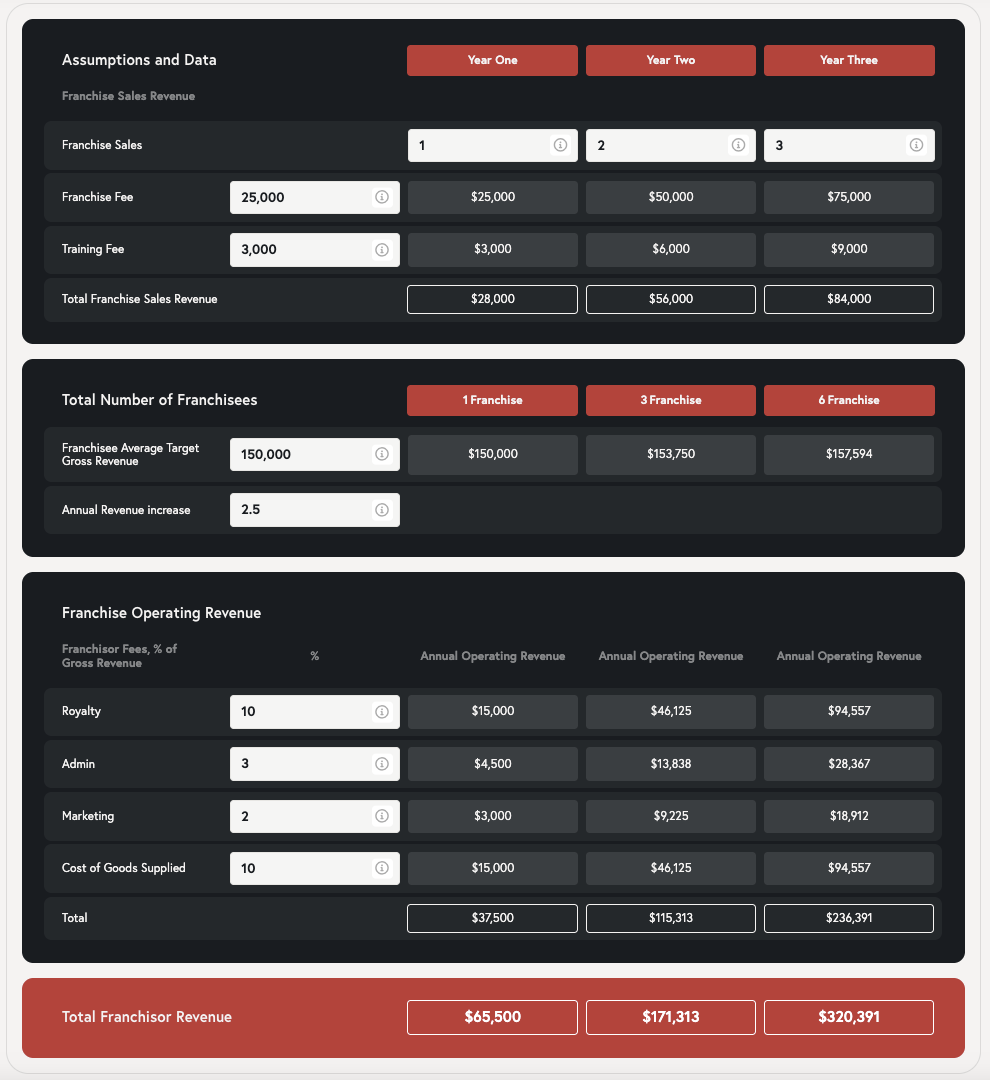
This structure allows you to scale without large debt or external investors. You receive an upfront franchise fee and ongoing royalties, while franchisees cover setup costs, leases, stock, and staffing.
Operationally, franchising also spreads responsibility. Each franchisee manages their own day-to-day operations, giving them control over outcomes while freeing you to focus on strategy, brand development, and innovation. By shifting from hands-on management to network leadership, you can grow faster and with less personal strain.
The model also provides more stability. Because franchisees have a financial stake in their success, they are highly motivated to perform well, maintain standards, and deliver great customer service.
In what ways does franchising improve consistency and quality?
Maintaining consistency across multiple sites is one of the toughest parts of business growth. Without structure, different locations often develop their own methods, which can dilute the brand and confuse customers.
Franchising solves this challenge through standardisation. Every franchisee operates under your established systems, ensuring each customer receives the same experience no matter which location they visit.
A well-built franchise model includes:
Comprehensive training programs that teach franchisees exactly how to operate your business.
Operational manuals that document processes clearly and consistently.
Regular communication and support to reinforce standards and share improvements.
Auditing and review systems to maintain accountability across the network.
At TMPlus, we help business owners develop these systems as part of the franchise setup process. Many businesses begin without documented procedures, and we assist in creating them to ensure consistency and scalability before recruitment begins.
When franchisees follow well-defined systems, customers experience the same level of service at every location, strengthening brand trust and reputation.
How does franchising leverage franchisee investment and motivation?
Franchisees are not just investors; they are business owners who bring energy, accountability, and local knowledge to your brand. Their success depends on the performance of their individual business, which means they are naturally motivated to deliver results.
This dynamic creates a powerful partnership. You provide the brand, systems, and training, while franchisees bring commitment, funding, and community connections. They understand their local market and have a personal incentive to attract and retain customers.
Financially, this model accelerates growth. Instead of waiting until you have enough capital to open the next branch, your network can expand faster through franchisee investment. You gain additional revenue through fees and royalties, which support further system development and marketing.
Franchisees’ dedication to their own success also helps maintain high service standards. When every operator has something to lose or gain, the collective performance of the network improves.
What challenges remain even when franchising?
Franchising is not a quick fix for every business challenge. If your systems are unstructured, your operations depend heavily on your personal oversight, or your brand is still developing, franchising may expose weaknesses rather than solve them.
A franchise is only as strong as the business it is built on. Before expanding, your business model must demonstrate that it is profitable, repeatable, and teachable. If every location requires custom management or constant intervention, franchising may not yet be the right fit.
That said, you do not need to have everything documented before working with TMPlus. Developing and documenting systems is part of what we do. Our role is to help turn your successful small business into a scalable model that others can follow with confidence.
How does franchising support long-term sustainability?
Unlike direct expansion, franchising creates a growth structure that continues to scale without demanding additional management resources. As your network grows, franchisees become part of a community that contributes ideas, feedback, and improvements.
This collective knowledge helps refine systems and keep your model relevant as markets evolve. Franchising also builds brand presence faster, as each new location increases visibility, customer access, and economies of scale.
Financially, it provides recurring revenue through royalties and franchise fees, helping fund continuous support and marketing without relying solely on your own capital. The more efficient your systems become, the more attractive your franchise is to future investors and franchise partners.
How does TMPlus assist in structuring for growth?
At TMPlus | Tereza Murray Franchising, we work with Australian business owners to turn successful operations into scalable franchise networks. Our process is hands-on and collaborative, starting with an in-depth review of your current business model and goals.
We develop your systems, operational manuals, and training programs, and partner with specialist franchise lawyers to ensure your agreements and compliance documents meet Australian standards. Our approach focuses on clarity, sustainability, and long-term profitability, ensuring your franchise grows without compromising quality or culture.
TMPlus helps you transition from being an operator to being a network leader. With the right structure, support, and systems in place, you can expand your brand confidently and sustainably.
Learn more at www.tmplus.com.au.
.svg)