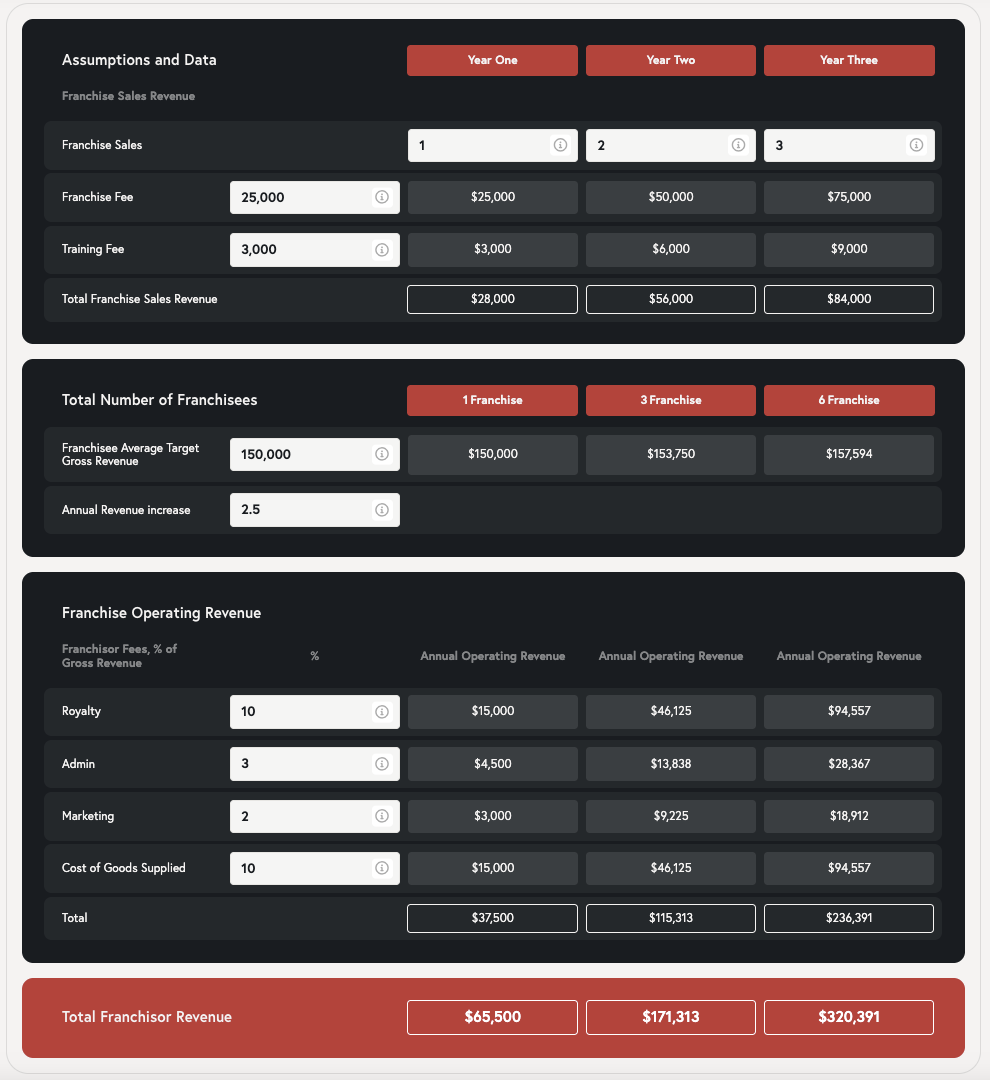


How Are Franchise Royalties and Marketing Fees Typically Structured?
Understanding how royalties and marketing fees work is an important part of deciding whether franchising is the right growth model for your business. These ongoing fees fund the support, systems and brand-building activity that help a franchise network grow. When structured well they create fairness, sustainability and a strong foundation for both franchisors and franchisees.
This article breaks down how these fees are typically structured in Australia, the considerations behind each model and the questions people commonly ask when researching franchise royalties and marketing levies.
What Are Franchise Royalties and Marketing Fees?
Royalty and marketing fees are the recurring payments franchisees make to access the franchisor’s brand, systems, training and broader support. These fees vary by industry, support level and maturity of the brand, but the underlying purpose is the same, to ensure the network has the tools, guidance and resources to grow successfully.
What is a royalty fee?
A royalty fee is the primary ongoing payment franchisees make to the franchisor. It is usually either a percentage of gross sales or a fixed amount paid weekly or monthly. This fee contributes to the franchisor’s costs for support, operational development, training, brand protection, system improvements and central administration.
What is a marketing fee?
A marketing fee, sometimes called a marketing levy, covers the cost of brand-wide marketing campaigns. This may include digital advertising, brand development, national promotions and market research. These funds are usually pooled into a marketing fund, allowing the brand to benefit from economies of scale.
Marketing fees are separate from royalties, although both may be calculated using similar methods.
How Are Royalty Fees Calculated?
Royalty structures vary widely, and the best approach depends on the business model and desired network outcomes.
What are the most common royalty structures?
Different industries use different approaches. The most common structures include:
- A fixed weekly or monthly amount that remains the same regardless of sales
- A percentage of turnover
- A sliding percentage that adjusts based on revenue levels
- A transaction-based fee, such as a small amount per job or service
Each method has its own benefits. Percentages scale with performance, while fixed fees provide simplicity and predictability.
What percentage is typical in Australia?
There is no mandated range, but many Australian franchise systems operate within roughly four to fifteen percent of gross sales. Retail and hospitality models generally fall in the lower range as a portion of the franchisors revenue is derived from product sales or supply rebates, while service-based models often sit at the mid-high end. The right percentage depends on the franchisor’s support levels, operational costs and the profitability structure of the franchisee.
Why does the calculation method matter?
The structure directly affects cash flow, growth potential and financial stability. For franchisees, a percentage-based model eases pressure during slower trading periods. For franchisors, the method must ensure predictable revenue to reinvest in systems, support teams and brand expansion. A poorly structured royalty model can affect recruitment, retention and long-term network health.
How Are Marketing Fees Structured and Used?
Marketing levies are generally more straightforward than royalties but still vary between brands.
How are marketing fees calculated?
Common approaches include:
- A fixed weekly or monthly fee
- A percentage of turnover
- A combination model, such as a minimum amount plus a performance-based percentage
Regardless of method, the aim is to ensure sustained investment in brand visibility and lead generation.
What do marketing fees usually cover?
Marketing levies often fund:
- National or regional advertising
- Digital campaigns across Google and social media
- Brand strategy and creative development
- Website management
- Market research and promotional materials
These activities support every franchisee by improving brand recognition and demand for the product or service.
What should franchisees understand before agreeing to a marketing fee?
Transparency is essential. Franchisees should understand how the fund is managed, whether local area marketing is separate, and how marketing efforts contribute to lead generation or brand development. Clear communication ensures alignment and trust across the network.
What Balance Should a Franchise Fee Structure Achieve?
A strong franchise model ensures that both parties benefit fairly.
How does the franchisor determine a fair structure?
A good fee model considers:
- The franchisor’s real support costs
- The franchisee’s ability to remain profitable while paying fees
- The long-term scalability of the system
- The maturity of the brand and network
- Whether fees should increase in stages as the brand evolves
Balancing these needs ensures the franchisor can deliver high-quality support without creating unnecessary strain on franchisees.
How do fees typically evolve as the network grows?
Some franchise systems introduce introductory royalty rates for early franchisees before moving to standard percentages. Others evolve their model over time by adding extra services, training programs or technology improvements. As the brand’s value increases, the support offering often becomes more comprehensive.
Why Do Royalty and Marketing Fee Structures Matter?
Fee structure is more than an administrative detail, it influences the entire network.
A well-designed structure supports:
- Healthy franchisee cash flow so new businesses can grow
- Sustainable franchisor operations to maintain support quality
- Attractiveness to potential franchisees who compare fee structures when evaluating opportunities
- Long-term alignment between both parties, especially when fees are tied to performance rather than fixed regardless of results
When fees are transparent and fair, franchisees feel supported, franchisors can reinvest confidently and the brand is positioned for long-term growth.
Conclusion
Understanding how royalties and marketing fees are structured helps business owners make informed decisions when considering expansion through franchising. These fees fund the support, systems and brand-building activities that add value to both sides of the relationship. The goal is not simply to charge a fee, but to create a financial structure that supports the long-term success of the entire network.
If you’re preparing to franchise your business and want to build a clear, fair and scalable fee model, TMPlus | Tereza Murray Franchising can help you design a structure that suits your operating model and growth goals. We also develop your operating manuals and systems as part of the process, so you don’t need to have everything documented before you begin your franchise journey.
.svg)