

What Are the Real Costs of Franchising?
Franchising is one of the most effective ways to scale a business in Australia, offering brand growth, motivated partners, and sustainable expansion. Yet, like any growth strategy, it requires investment. Understanding what those costs are and how to manage them helps ensure your franchise launches successfully and grows profitably.
Some expenses are straightforward, such as legal documents and marketing materials. Others are less obvious, emerging as your network develops. By planning for both, you can protect cash flow, manage risk, and avoid surprises as you expand.
What upfront costs must you budget for when franchising?
The setup stage of a franchise is where most of the foundation costs occur. These are one-off investments that create the legal, operational, and marketing frameworks your system needs.
Legal and compliance costs
Every franchisor must comply with the Australian Franchising Code of Conduct. This includes providing a franchise agreement, disclosure document, and other compliance materials. Legal advice ensures your system is structured correctly and your brand is protected.
TMPlus works with specialist franchise lawyers to prepare these documents as part of a complete development package. This approach keeps costs manageable and ensures you have all mandatory legal foundations in place from day one.
Training and operations manuals
Franchisees need clear instructions on how to deliver your product or service consistently. Well-written operational manuals and training frameworks create uniformity across locations and streamline onboarding.
You don’t need to have these documents before working with TMPlus. Our team develops and structures them for you as part of the franchise setup process, ensuring everything is written in a practical, easy-to-follow format.
Branding and marketing setup
A strong franchise brand is essential for attracting both customers and franchisees. At the setup stage, you may refresh your brand identity, develop marketing templates, and create franchise-specific materials such as recruitment websites or brochures.
TMPlus helps business owners design marketing systems and collateral that can be reused by franchisees, keeping long-term marketing costs predictable and consistent.
These upfront investments create the foundation of your franchise model, allowing you to scale confidently.
What ongoing expenses should franchisors plan for?
Once your franchise system is launched, you’ll need to plan for recurring operational costs. These ensure your franchisees remain supported, your brand stays consistent, and your system continues to evolve.
Franchisee support and training
Initial training is only the beginning. Ongoing support is critical to help franchisees perform well and stay aligned with your standards. Regular workshops, check-ins, and refresher sessions all require time and resources.
Marketing contributions
Many franchises include a marketing fund that franchisees contribute to. This fund supports national or regional campaigns, but the franchisor may still invest in brand development and lead generation to attract new franchisees.
Technology and systems
Modern franchises depend on digital tools such as CRM software, booking systems, and point-of-sale platforms. Subscription fees, maintenance, and updates should all be factored into your annual budget.
Network communication and events
Hosting conferences or online meetings strengthens culture and collaboration across your network. These initiatives help franchisees feel connected but require planning and resources.
Ongoing costs are part of running a high-performing franchise. When structured carefully, they can be shared efficiently across the network, reducing individual strain on both franchisor and franchisees.
What hidden or unexpected costs can arise?
Even with careful planning, certain expenses can appear unexpectedly. These are not necessarily large, but they can impact profitability if not anticipated.
Quality control and compliance monitoring
Maintaining brand consistency across multiple locations may require audits, site visits, or quality checks. These ensure standards remain high but can incur travel and administrative costs.
Dispute resolution or legal support
While strong agreements reduce risk, disagreements can occur. Having access to reliable legal advice and mediation support helps resolve issues quickly and protect relationships.
Operational surprises
External factors such as supplier price increases, market shifts, or staff shortages can affect costs. Building a small contingency fund into your franchise budget helps absorb these shocks without disrupting operations.
Technology evolution
Digital tools evolve quickly. New requirements for automation, data management, or customer experience improvements may require system upgrades sooner than expected.
By identifying these potential costs early, you can manage your financial plan proactively rather than reactively.
How can you budget and control your franchising costs effectively?
The most successful franchisors treat financial management as part of their system, not an afterthought. A realistic budget helps balance growth with sustainability.
Practical ways to control costs include:
Creating a detailed budget for setup, ongoing, and contingency costs.
Tracking and reviewing expenses regularly to spot overspending early.
Negotiating with preferred suppliers to leverage network buying power.
Using cloud-based technology to automate tasks and improve efficiency.
Gathering feedback from franchisees to identify cost pressures and opportunities for improvement.
By maintaining visibility over your expenses and forecasting accurately, you can expand your network with confidence and keep your operations profitable.
What return can franchising deliver compared to direct expansion?
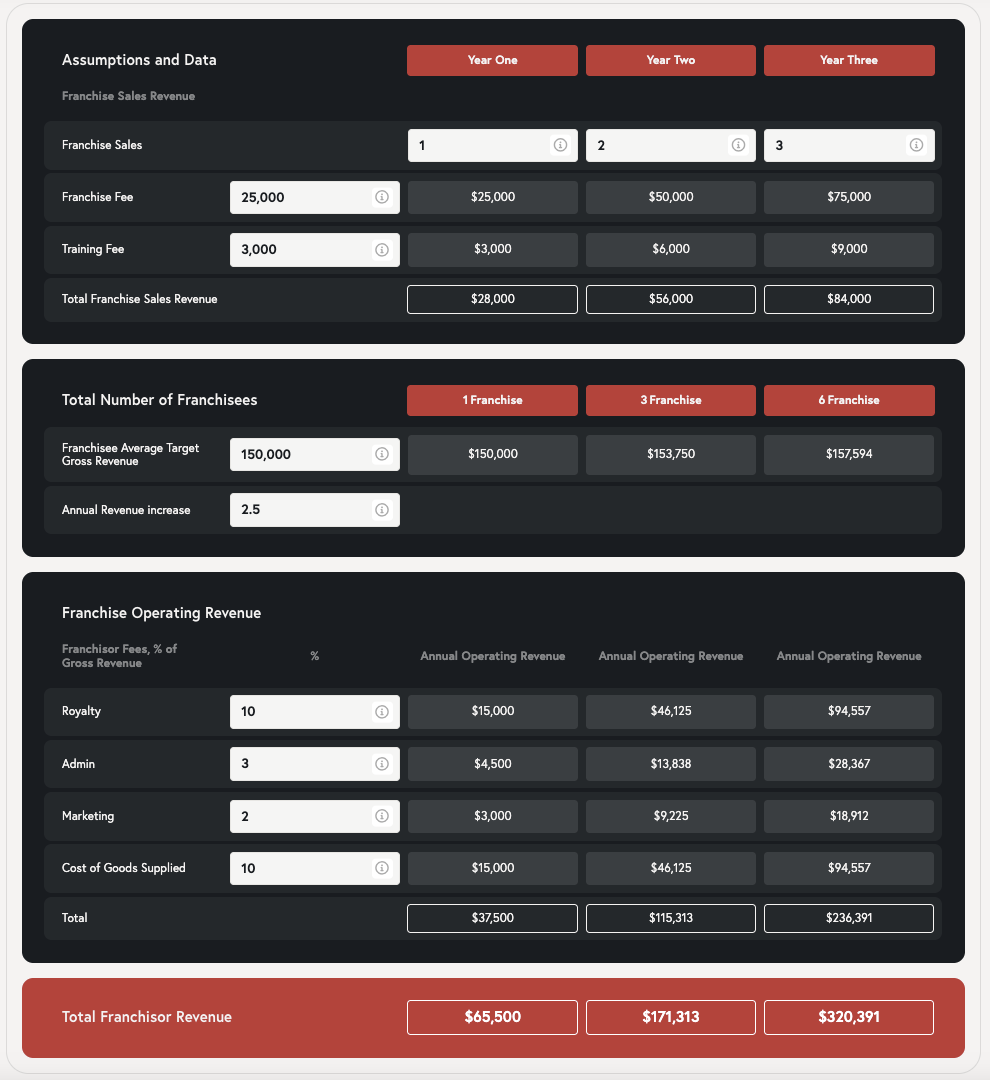
Direct expansion requires significant upfront investment and ongoing management. Franchising spreads both cost and risk by allowing franchisees to fund their own business units. You earn from initial franchise fees, ongoing royalties, and supply chain revenue while avoiding many of the expenses associated with company-owned growth.
Over time, a well-structured franchise system can generate strong, predictable cash flow and increase the overall value of your brand. By reducing reliance on your own capital and sharing responsibilities with motivated partners, franchising allows faster and more secure growth than traditional expansion methods.
How does TMPlus help business owners manage franchising costs?
At TMPlus | Tereza Murray Franchising, we help business owners build scalable, cost-effective franchise systems. Our end-to-end process includes legal coordination, system design, documentation, and marketing support — everything needed to launch without unnecessary expense.
We understand that most businesses do not have existing manuals or systems when they begin. TMPlus develops these for you, ensuring your franchise is both professional and practical. Our packages are structured to include essential compliance requirements, reducing the need for costly third-party consultants.
By combining strategy, structure, and affordability, TMPlus helps small and medium-sized businesses expand into franchising without financial strain. We focus on creating sustainable models that deliver long-term returns, not short-term promises.
Learn more at www.tmplus.com.au.
.svg)