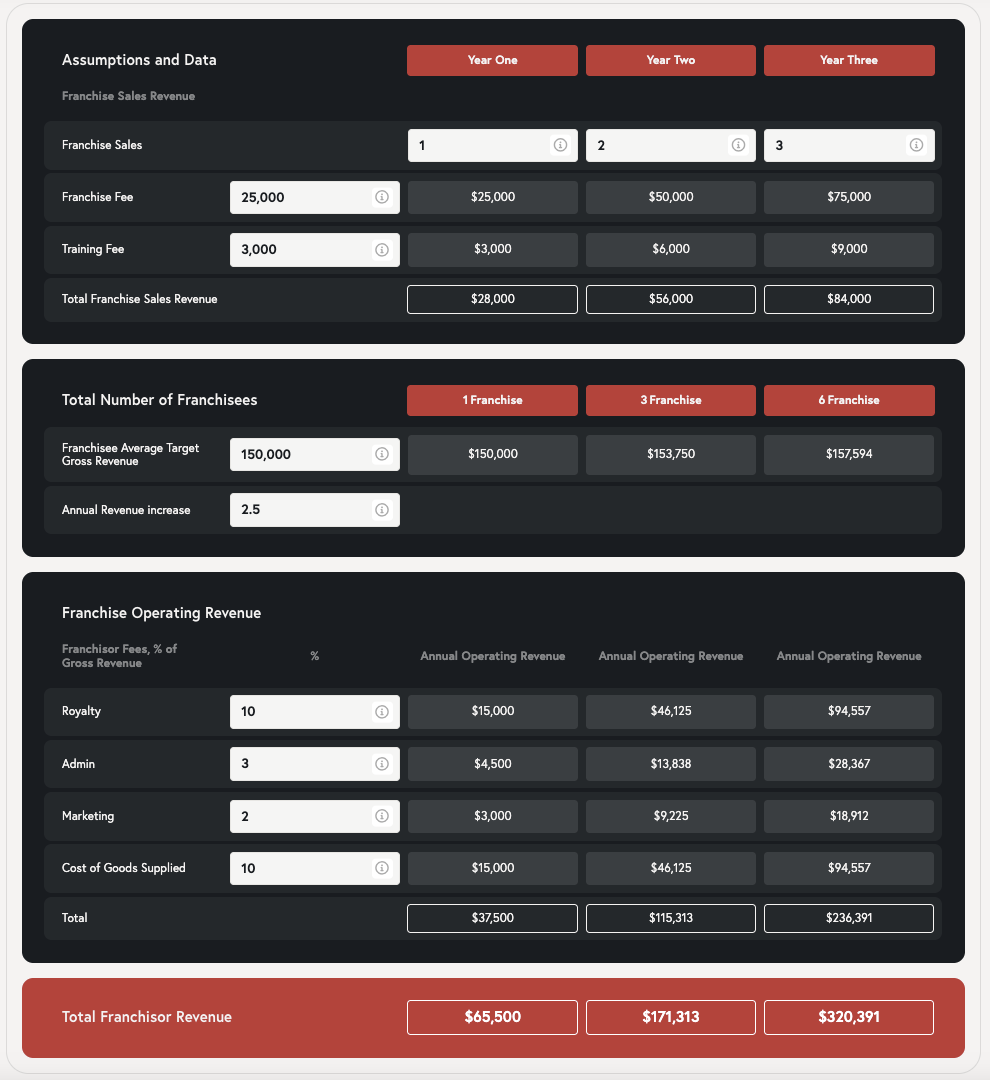


Designing a Fair Franchise Fee Structure
Setting up a fair and effective franchise fee structure is one of the most strategic parts of developing your franchise model. It determines not only how your brand generates revenue, but also how franchisees perceive value and long-term opportunity. The right structure attracts quality operators, builds trust, and ensures sustainability for everyone involved.
A franchise fee model should never feel arbitrary. It should reflect the genuine value of your systems, support, and brand strength. Whether you’re launching a new franchise or reviewing an existing one, understanding how to balance fairness with profitability is key to building a strong, scalable network.
What Are the Main Types of Franchise Fees?
Every franchise includes several key fee components. Each plays a role in establishing commitment, maintaining consistency, and funding ongoing support.
Initial Franchise Fee
The initial franchise fee gives franchisees the right to operate under your brand and access your systems. It reflects your investment in training, setup support, intellectual property, and ongoing business resources.
Setting the right amount is a balance. Too low, and it may undervalue your offering; too high, and it can deter capable franchisees. The most successful models explain exactly what this fee includes — such as onboarding, location setup assistance, or initial marketing. This transparency helps franchisees view it as an investment, not a cost.
Ongoing Royalties
Royalties are typically paid as a percentage of sales, creating a shared interest in performance. This ensures your income grows in line with your franchisees’ success. These funds usually cover network support, brand maintenance, training, and system improvements.
Be clear about where royalties go. When franchisees see that ongoing fees contribute to tangible benefits — such as improved technology, stronger marketing, or better support — they’re more comfortable with the arrangement and more motivated to perform.
Additional Fees
Most franchises include specific additional fees such as marketing contributions, software access, or technology fees. These should always be explained clearly and used for their intended purpose. If, for example, franchisees contribute to a marketing fund, show them the results of national campaigns to build trust and accountability.
How Do You Decide on the Right Fee Level?
There’s no universal formula for determining franchise fees. The best structures are guided by the business model, industry standards, and long-term strategy.
Conduct Market Research
Begin by researching comparable franchise brands in your sector. While you don’t need to mirror competitors, knowing the range helps position your offer realistically. Assess how established brands versus emerging systems structure their fees and what value they include.
Keep in mind that franchisees evaluate fees through a return-on-investment lens. They’ll compare cost against expected revenue and support levels. This means your value proposition — not just your price — must be strong.
Understand Your Costs
You can’t build a sustainable model without understanding your cost base. Consider the real expenses associated with training, recruitment, brand development, and ongoing franchisee support. Your fees should cover these elements while leaving room for reinvestment into the network.
For example, if your business includes significant field support or marketing management, your royalty should reflect that. If your systems are lean and digital-first, you might opt for lower recurring fees but a stronger initial buy-in.
What Are the Pros and Cons of Different Fee Models?
Franchise systems typically use one of three main structures — fixed, percentage, or hybrid models — depending on revenue consistency and scalability goals.
Fixed Fees
A fixed royalty (such as a set monthly amount) provides predictability. It works well for service-based businesses with steady cash flow, like maintenance or cleaning franchises. However, it can create pressure during quieter months and may be seen as less flexible for new franchisees.
Percentage Fees
Percentage royalties are the most common structure. They scale automatically with performance, ensuring both franchisor and franchisee benefit from growth. This model also encourages franchisors to provide continuous support that drives sales and strengthens the brand.
Hybrid Models
Some businesses choose a hybrid system that combines a smaller fixed base fee with a percentage component. This gives stability to the franchisor while providing fairness and adaptability for franchisees. Hybrid models are particularly effective for industries with seasonal variations or uneven revenue patterns.
How Can You Make Your Fee Model Fair and Appealing?
Franchisees are more likely to join — and stay — when they see fees as fair and justified. Your structure should be designed to give new operators every chance of success while ensuring your business remains profitable.
Support Early-Stage Profitability
For new franchisees, early cash flow can be tight. Offering flexible options such as reduced royalties during the launch phase, staged payments, or interest-free support packages can make your franchise more appealing. TMPlus offers these options to help small business owners franchise affordably and grow without heavy debt.
Demonstrate Value at Every Stage
Frame your fees around outcomes, not just costs. For example, explain how your training programs reduce learning curves or how your marketing systems generate leads faster. This approach reframes fees as part of a proven investment pathway.
Keep Everything Transparent
Transparency builds trust. Clearly outline what each fee covers and when payments are due. Avoid hidden or unexpected costs. When franchisees know exactly where their money goes, they’re far more likely to engage positively with your system.
Why Does a Fair Fee Structure Support Growth?
A well-designed fee model directly affects how your franchise network grows. When fees are fair and clearly communicated, franchisees feel respected and supported. This encourages stronger performance, positive word-of-mouth, and long-term retention.
If the model feels unbalanced, however, you may attract the wrong type of operators — those focused only on short-term profit or those who struggle to remain viable. Fairness creates alignment: when franchisees succeed, so does the brand.
It’s also an important part of your reputation. Transparent, ethical fee structures build credibility in the market and make your franchise opportunity stand out among competitors.
How Can TMPlus Help You Structure Franchise Fees?
Developing a fair and profitable fee model requires careful planning, financial understanding, and strategic foresight. That’s where expert support can make a real difference.
At TMPlus | Tereza Murray Franchising, we work with Australian business owners to design franchise systems that balance profitability with fairness. Our team helps you identify the right fee levels, model your costs, and communicate your value clearly to prospective franchisees.
TMPlus also offers interest-free franchise development packages, allowing you to launch your system affordably while keeping cash flow healthy. With clear processes, transparent pricing, and ongoing support, TMPlus helps you create a franchise model that works in the real world — not just on paper.
.svg)