For Australian Business Owners Considering Franchising, 2026 Is A Market That Rewards Stronger Models, Better Planning And Commercial Discipline
Franchising remains an established pathway for Australian businesses looking to expand beyond their original operation. But the environment in which businesses are franchising has changed.
Higher operating costs, more considered franchise buyers and significant changes to Australia's Franchising Code of Conduct mean that developing a franchise in 2026 requires more than simply documenting a successful business and putting territories on the market.
For a small business owner considering franchising, that isn't necessarily a negative.
It means there is greater emphasis on developing a franchise that makes commercial sense for both sides: the franchisor who wants to expand and the franchisee investing in the opportunity.
So, what is actually happening in Australian franchising in 2026, and what should a small business owner take from it?
Australia's New Franchising Rules Have Raised The Bar
One of the most important developments is Australia's new Franchising Code of Conduct.
The new Code commenced on 1 April 2025, with additional requirements taking effect from 1 November 2025. As a result, businesses entering franchising in 2026 are operating entirely within this newer regulatory environment.
Among the changes, franchisors must give franchisees a reasonable opportunity to make a return on the investment required by the franchisor during the term of the agreement. There are also strengthened requirements around significant capital expenditure, specific purpose funds and, in certain circumstances, compensation for early termination.
For a prospective franchisor, the important point isn't simply that there are more legal requirements.
It places even greater importance on the commercial structure of the franchise before it goes to market.
Franchise fees, establishment costs, equipment, fit-outs, ongoing fees, territory structure and the length of the franchise term all need to work together logically.
That is something a business should be considering during franchise development, not after the first franchisee has joined.
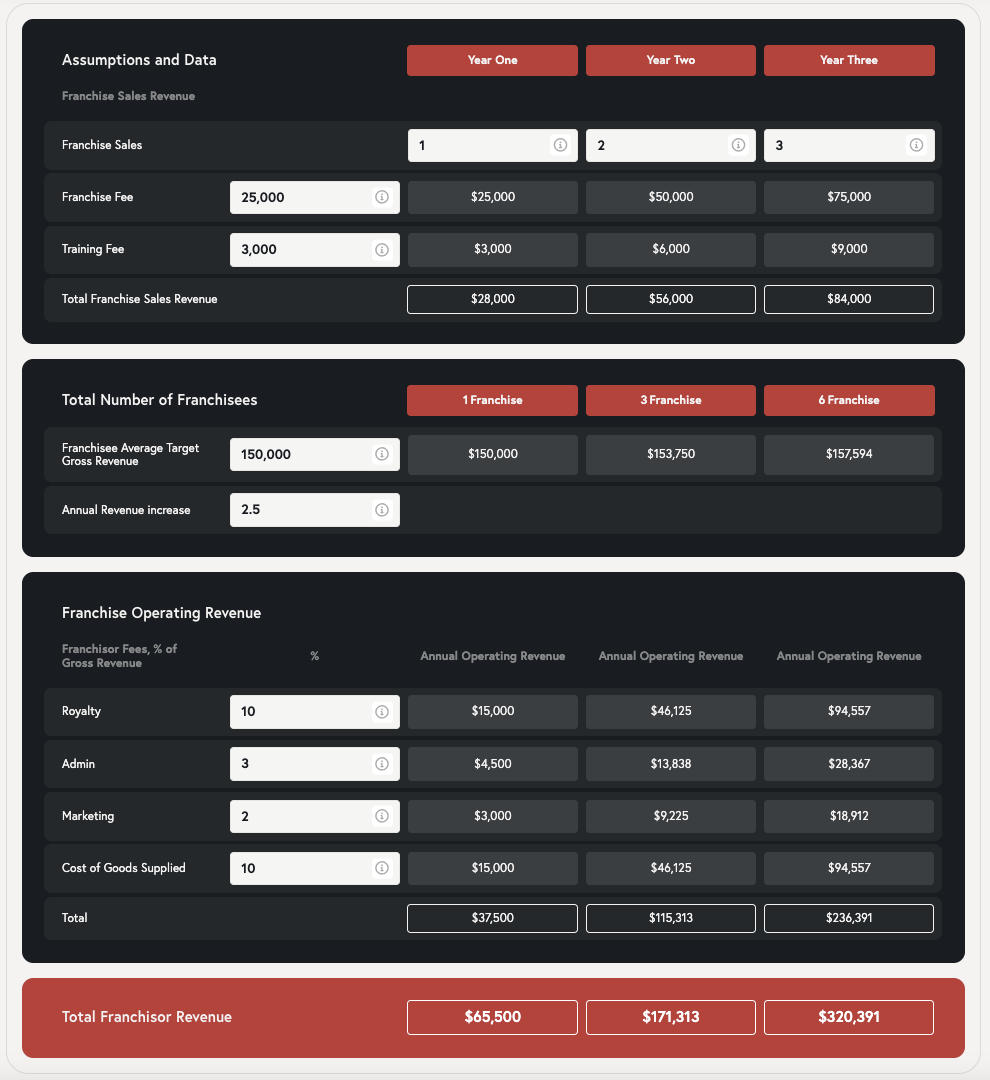
The Economics Of The Franchise Matter More Than Ever
Franchise buyers aren't simply buying a brand.
They are assessing the total investment required, what it costs to operate the business, the support they receive and whether they can see a realistic pathway to building a viable business.
Australia's new Code reinforces that focus. Significant capital expenditure required by a franchisor, including expenditure relating to fit-outs, equipment, relocations and technology upgrades, can trigger specific disclosure obligations. Franchisors may also need to explain how a franchisee is likely to recoup that expenditure.
This creates an important opportunity for smaller businesses considering franchising.
A franchise model does not necessarily need an expensive retail location or major infrastructure to be attractive.
Service businesses, mobile businesses, home-based operations and other lower-overhead models can potentially create franchise structures with comparatively simple establishment requirements.
The question isn't whether a business looks like a traditional franchise.
It is whether the business model can be replicated commercially and whether another person can be trained and supported to operate it.
Franchise Buyers Are Doing Their Homework
Prospective franchisees have access to more information than ever before, and Australian franchising regulation is deliberately structured around informed decision-making.
Franchisors are required to provide prospective franchisees with prescribed information, including a disclosure document containing specific information about the franchise system.
For an emerging franchisor, this makes transparency important from the beginning.
A franchise opportunity needs to withstand scrutiny.
A prospective franchisee may want to understand how the business generates customers, what they will be responsible for, what support is provided, how territories work, what their ongoing costs will be and what experience they need.
That is ultimately healthy for the sector.
A franchise should not rely on a great sales presentation. It should be built around a business model that can be clearly explained and properly investigated.
Recruitment Is Becoming A Business Function Of Its Own
Another important change is the sophistication required to recruit franchisees.
Twenty years ago, placing an advertisement in a business opportunities publication may have formed a significant part of a recruitment strategy.
Today, prospective franchisees move between search engines, social media, franchise directories, websites, reviews and other digital sources while researching opportunities.
For a new franchisor, franchise recruitment therefore needs its own strategy.
The person who buys your product or service isn't necessarily the person who will buy your franchise.
Franchise recruitment marketing needs to identify who the ideal franchise partner is, where that person can be reached, what will attract them to the opportunity and what questions they need answered before progressing.
This also means emerging franchisors need to budget for recruitment marketing as part of expansion.
Creating the franchise system provides the vehicle for growth. Marketing and recruitment are what begin putting franchisees into it.
Technology Is Making Small Franchise Networks Easier To Manage
One of the less discussed advantages available to emerging franchisors in 2026 is technology.
Systems that once required substantial administrative infrastructure can now be managed through relatively accessible platforms.
CRM systems can manage franchise enquiries. Learning platforms can support training. Cloud-based operational systems can centralise documentation. Scheduling, quoting, invoicing, customer management and performance reporting can increasingly be standardised across locations.
AI is also changing how businesses approach administration, marketing, customer communication and internal knowledge management.
Technology does not replace the need for good franchise systems, but it can make those systems easier to replicate and manage.
For a small business owner, that potentially lowers one of the historical barriers to franchising: the belief that a large head-office team must exist before expansion can begin.
It doesn't.
The support structure needs to be appropriate for the network, and it needs the capacity to grow as franchisees are added.
Small Businesses Should Think About Franchising Earlier, But Not Prematurely
There is an important distinction here.
You do not need to wait until you have ten company-owned locations before considering franchising.
But you do need a business worth replicating.
That generally means understanding your financial performance, having a clearly defined operating model, knowing how customers are acquired and served, identifying what makes the business different and being able to teach another person how to reproduce the operation.
Franchising can then become a method of expansion rather than an attempt to fix weaknesses in the original business.
The strongest starting point is usually a business owner asking: "Could somebody else successfully operate this business using our systems?"
If the answer is potentially yes, the next step is determining how the commercial and franchise structure would work.
2026 Is About Sustainable Franchise Growth
Perhaps the biggest theme for Australian small businesses considering franchising is sustainability.
The regulatory direction is placing greater attention on franchisee investment, disclosure and the commercial relationship between franchisor and franchisee.
That should encourage business owners to think beyond simply selling the first few franchises.
What happens when franchisee number one opens? Can you train them? Can you support them? Can your marketing systems generate customers in another territory? Can your supply arrangements scale? Can you monitor standards? And can the model remain commercially worthwhile as the network grows?
Those are the questions that turn a franchise concept into a franchise system.
For the right small business, franchising remains a powerful way to expand without the business owner personally funding, staffing and managing every new location or territory.
But the opportunity in 2026 is not simply to franchise.
It is to build a well-structured, commercially considered franchise model capable of supporting sustainable growth.
For business owners with a proven operation and ambitions beyond their current location, that makes franchising a growth strategy still very much worth exploring.
