Growth Cost Analysis: Employees vs Franchising
As your business grows, deciding how to scale is one of the most important strategic choices you’ll make. Should you continue hiring employees to manage new locations, or shift to a franchising model that allows others to invest in your brand? Both approaches have clear advantages and challenges, but the costs, risks, and growth potential differ greatly.
Understanding these differences helps you make an informed decision that aligns with your financial goals, operational style, and long-term vision.
What is the difference between employee-based growth and franchising?
Expanding through employees means the business owner funds and manages every new site directly. You hire, train, and pay staff while maintaining full control over day-to-day operations. Franchising, on the other hand, empowers independent business owners (franchisees) to operate under your brand using your systems.
Each model can deliver growth, but they do so through very different financial and operational structures.
What are the costs of expanding with employees?
Hiring employees gives you full control, but it also creates a higher financial burden. You fund all new operations, pay all wages, and manage every moving part.
Initial costs
Recruitment and onboarding: Advertising roles, screening candidates, and inducting new hires.
Training: Developing and delivering programs that align staff with your brand standards.
Infrastructure: Leasing new premises, purchasing equipment, and investing in technology or systems for expansion.
Ongoing costs
Wages and benefits: Salaries, superannuation, insurance, and paid leave all add to ongoing costs.
Management oversight: Supervisors, HR, and administrative staff are needed to maintain control as operations scale.
Turnover: The average Australian employee stays less than two years, meaning you’re constantly reinvesting in hiring and training.
Challenges
High operational costs reduce cash flow for growth.
Maintaining consistency across multiple locations becomes harder.
Expansion is limited by your financial and management capacity.
While this model offers full operational control, it can also slow growth and increase risk.
What are the costs of expanding through franchising?
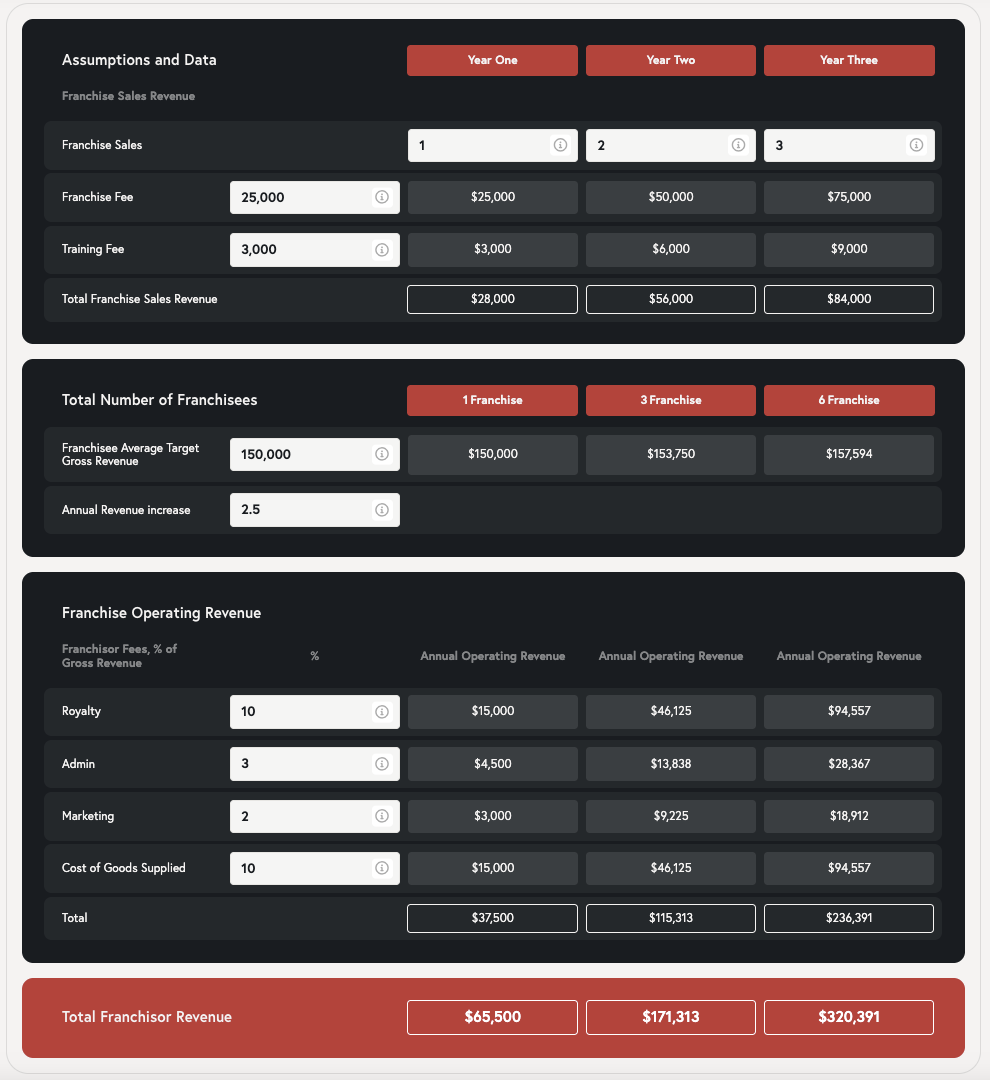
Franchising transfers much of the financial responsibility and daily management to franchisees. Instead of hiring and paying employees directly, you create a framework for others to buy into your brand and operate under your proven system.
Initial costs
Franchise system development: Creating operations manuals, training programs, and legal agreements.
Brand positioning and marketing: Promoting your franchise opportunity to attract the right partners.
Support setup: Establishing training resources, communication platforms, and onboarding systems.
Ongoing costs
Training and support: Continuous assistance to ensure franchisees meet brand standards and succeed.
Marketing coordination: Managing collective campaigns funded by franchisees.
Compliance: Monitoring franchise performance and ensuring each site adheres to policies and brand guidelines.
Advantages
Lower capital investment: Franchisees fund their own locations, reducing your direct financial outlay.
Motivated operators: Franchisees have skin in the game, driving performance and accountability.
Faster scalability: Growth accelerates as more franchisees join, each investing in their own success.
Shared responsibility: Operational and staffing challenges are managed at the franchisee level.
Franchising provides leverage, enabling you to grow faster with less capital while maintaining brand consistency through systems and support.
FAQ's
What are the financial benefits of franchising over hiring employees?
Franchising shifts capital costs to franchisees, allowing rapid expansion with lower financial risk. It reduces the need for debt or large-scale investment while generating ongoing revenue through fees and royalties.
How much control do franchisors have compared to employers?
Employers have complete control over staff and operations. Franchisors maintain brand and operational standards through agreements and audits, but franchisees manage their day-to-day activities independently.
Which model offers faster growth?
Franchising generally scales faster because it leverages franchisee investment. Employee-based growth is slower and limited by internal resources and available capital.
What are the risks of franchising?
Franchising requires strong systems and consistent oversight. Poor franchisee selection or weak support can damage the brand, so training and clear documentation are vital.
When is it better to hire employees instead of franchising?
If your business requires tight control over every customer interaction or has a highly specialised service model, hiring employees may be better suited. Franchising works best for proven, repeatable systems.
Cost comparison: employees vs franchising
| Aspect | Employees | Franchising |
|---|---|---|
| Initial investment | High – infrastructure, recruitment, and training | Moderate – system development and marketing |
| Ongoing costs | Salaries, benefits, and management overhead | Lower – shared through franchisee contributions |
| Financial risk | High – business funds all growth | Lower – franchisees invest their own capital |
| Scalability | Limited by financial capacity | High – scalable through franchise network |
| Operational control | Full control | Shared oversight |
| Commitment duration | Short – higher turnover rates | Long-term – franchise agreements span years |
This comparison highlights why many established brands choose franchising once their systems are proven and repeatable.
How can you decide which model suits your business?
Choose employees if:
You want to retain complete control over operations.
You have the financial capacity to fund new locations.
Your industry requires strict process control or proprietary service delivery.
Choose franchising if:
You want to scale faster while reducing financial risk.
Your business model is profitable, repeatable, and easy to teach.
You prefer working with motivated owner-operators invested in their success.
For many businesses, franchising becomes the natural next step once systems are established and brand reputation is strong.
Why is franchising often more sustainable?
Franchising creates a partnership model where everyone’s success is interconnected. Franchisees invest financially and emotionally in the brand, driving performance and innovation. The franchisor focuses on training, support, and strategic direction rather than daily operations.
This structure allows for faster national expansion, stronger brand recognition, and higher long-term profitability with less direct overhead.
Employee-based models can still succeed but require significant financial backing, management resources, and constant oversight to maintain quality.
How can TMPlus help you prepare for franchising?
Before launching a franchise, it’s essential to build robust systems that can be easily replicated. This includes clear operational processes, comprehensive manuals, and defined training programs.
Working with specialists ensures your documentation and structure are ready to support franchisees confidently. A well-prepared system protects your brand and sets every franchisee up for success.
Conclusion
Choosing between employees and franchising comes down to how you want to grow and what level of control, investment, and scalability you’re comfortable with. Employees offer hands-on management but carry higher costs, while franchising allows expansion through shared investment and motivated partners.
At TMPlus | Tereza Murray Franchising, we work with start-ups and small business owners to assess their growth options, develop clear operating manuals, and build systems that support scalable, sustainable expansion. You don’t need everything documented before you begin—we help you create the structure that turns your business into a franchise-ready model.
.svg)