

Franchise Planning Essentials for Growth
Franchising is one of the most effective ways for small business owners to expand without carrying the entire financial and operational burden themselves. When done correctly, it allows you to replicate your success in new locations, build brand strength, and create sustainable income streams. But successful franchising doesn’t happen by chance, it happens through careful planning.
A strong franchise business plan gives you the structure and direction needed to scale successfully. It protects your brand, aligns your vision, and provides a clear roadmap for how your business can grow through others. Without a plan, it’s easy to lose focus, make reactive decisions, and struggle to maintain consistency across locations.
Whether you’re just beginning to explore franchising or already preparing your systems for duplication, developing a franchise plan is the single most important step to long-term success.
What Does Strategic Planning Mean in Franchising?
Strategic planning in franchising means thinking beyond your current operation and considering how every process, product, and decision will affect future franchisees and customers. It requires a broader perspective than traditional business planning because your goal is to create a model that others can follow successfully.
This involves more than writing down your current processes. It’s about building a clear structure that defines how your business operates, how franchisees will deliver the same experience, and how your brand will remain consistent across locations. For instance, a café might decide to alter a recipe to save time. In a single outlet, that’s a small tweak. In a franchise network, that change can influence supply chains, training, and customer expectations across every store.
Strategic franchise planning ensures these changes are made thoughtfully and communicated clearly. It brings predictability and confidence to your system, helping you scale without compromising quality or culture.
What Should a Franchise Business Plan Include?
Every successful franchise starts with a strong foundation. Your business plan should cover the areas that determine how your model will function and grow. While each business is unique, most franchise plans include:
Brand Identity: Define what your brand represents and the key elements that must stay consistent, from design and service standards to customer tone and visual presentation.
Customer Focus: Understand who your ideal customer is, what they value, and how your business serves them better than competitors.
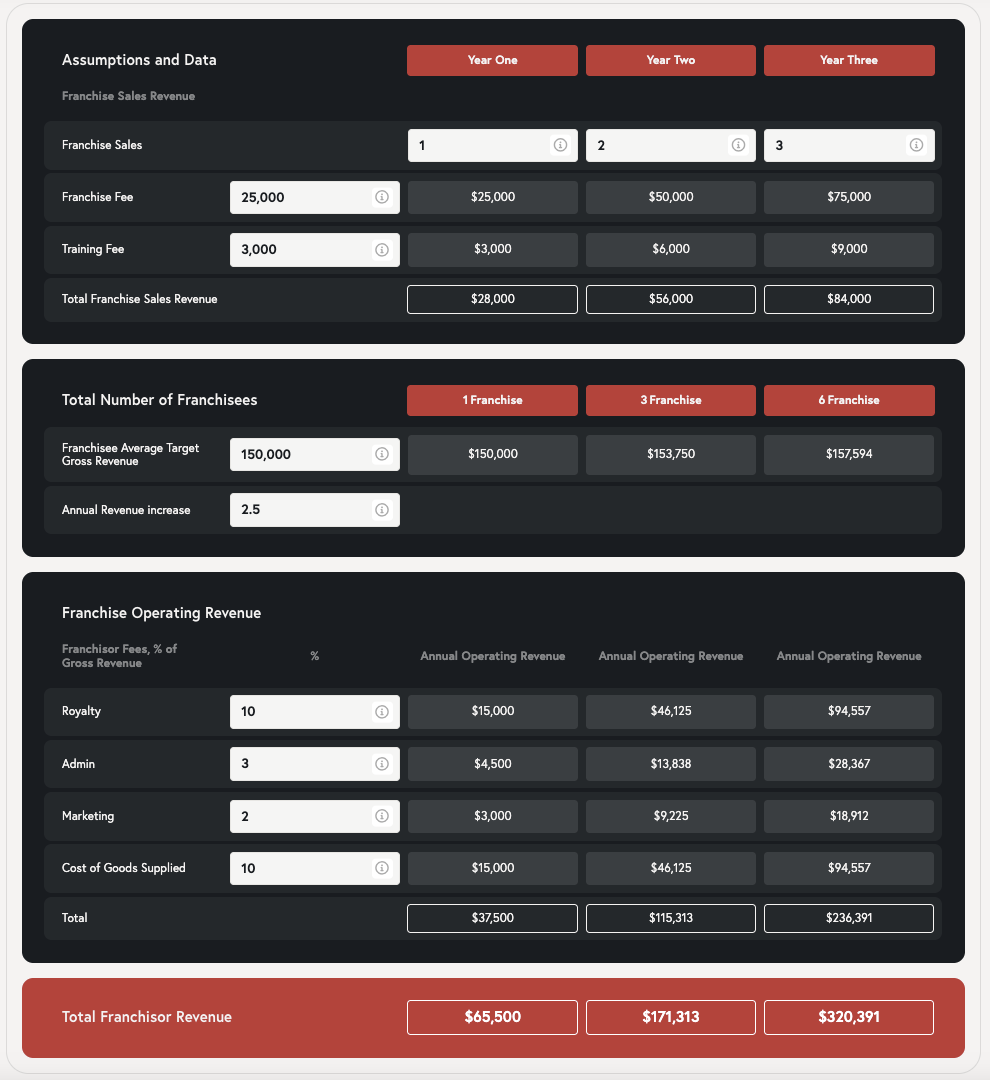
Financial Model: Outline how income and expenses are structured for both franchisor and franchisees, including fees, royalties, and marketing contributions.
Operational Systems: Document procedures so franchisees can easily follow them, ensuring uniformity across all outlets.
Training and Support: Detail how new franchisees will be trained, mentored, and supported during their setup and ongoing operations.
Growth Targets: Set realistic goals for the number of locations, territories, or sales milestones, and map out how these will be achieved.
When each of these components aligns, your franchise model becomes more scalable, profitable, and attractive to potential partners.
Why Is Franchise Planning Important for Long-Term Growth?
Without structured planning, expansion can quickly become chaotic. Early planning provides control, clarity, and consistency — three things that are essential for long-term growth.
It also allows you to anticipate potential challenges before they arise. For example, as your network grows, maintaining brand standards becomes harder. Your plan should include measures such as structured training programs, quality control systems, and defined communication channels to protect consistency.
Well-planned franchises are also easier to manage and more appealing to investors. Prospective franchisees want to see that the business has a proven, repeatable system and clear leadership. When your planning is solid, it shows that you’re serious about their success and ready to support them every step of the way.
How Do You Write a Franchise Business Plan?
Writing your franchise business plan can feel like a big task, but breaking it down into steps makes it manageable.
Start by identifying what’s already working well in your business. Focus on your strengths — what generates consistent revenue, what keeps customers coming back, and what differentiates you in the market. Once you know these, capture them in writing.
Next, document your daily operations. Record everything from how stock is ordered to how customer complaints are handled. These details become the backbone of your training materials and operations manuals.
Review what can and cannot scale. Some systems may work perfectly in one location but need adjusting before expanding. This step ensures that every franchisee can deliver the same results with minimal confusion.
Then, build practical tools such as checklists, manuals, and onboarding guides that franchisees can use from day one. These tools don’t need to be perfect initially — they can evolve as your network grows.
Finally, make it a habit to review and refine your plan regularly. The best franchise systems adapt as markets, technology, and customer expectations change.
What Are the Benefits of Planning Before You Franchise?
Planning early helps transform your growth strategy from reactive to proactive. Instead of responding to issues as they appear, you’re able to anticipate them and prevent disruption.
A well-developed plan:
Builds confidence among franchisees and investors.
Reduces risks associated with inconsistent delivery.
Simplifies training and onboarding.
Improves brand reputation through consistency.
Provides a roadmap for marketing, supply, and recruitment.
With a clear plan in place, your business becomes easier to manage, easier to communicate, and easier to expand. Franchisees feel more confident joining a brand that has structure behind it, while you gain peace of mind knowing your growth is built on a strong foundation.
How Does Franchise Planning Support a Sustainable Network?
Franchise networks succeed when everyone operates with shared purpose and clear expectations. Strategic planning ensures each franchisee understands not only what to do, but why it matters.
It allows for consistent customer experiences, stronger teamwork, and reduced duplication of effort. It also makes innovation simpler — when your systems are clear, you can test improvements in one location and roll them out smoothly across others.
Good planning also gives you agility. You can respond to market changes quickly, train new operators efficiently, and manage brand evolution without confusion. This level of preparedness is what separates thriving franchise networks from those that struggle.
How Can TMPlus Help Build Your Franchise Plan?
The difference between a strong franchise and a struggling one often comes down to how well it’s planned from the beginning. You don’t need to have every document or process in place before starting — TMPlus helps develop and structure these systems with you.
At TMPlus | Tereza Murray Franchising, we work with business owners across Australia to design scalable franchise models, build detailed operational frameworks, and develop customised strategies that support sustainable growth.
Our team helps you prepare your business to franchise confidently, ensuring you have a clear plan, strong structure, and long-term vision. Whether you’re ready to franchise now or just exploring the idea, we make the process simpler, smarter, and achievable.
.svg)